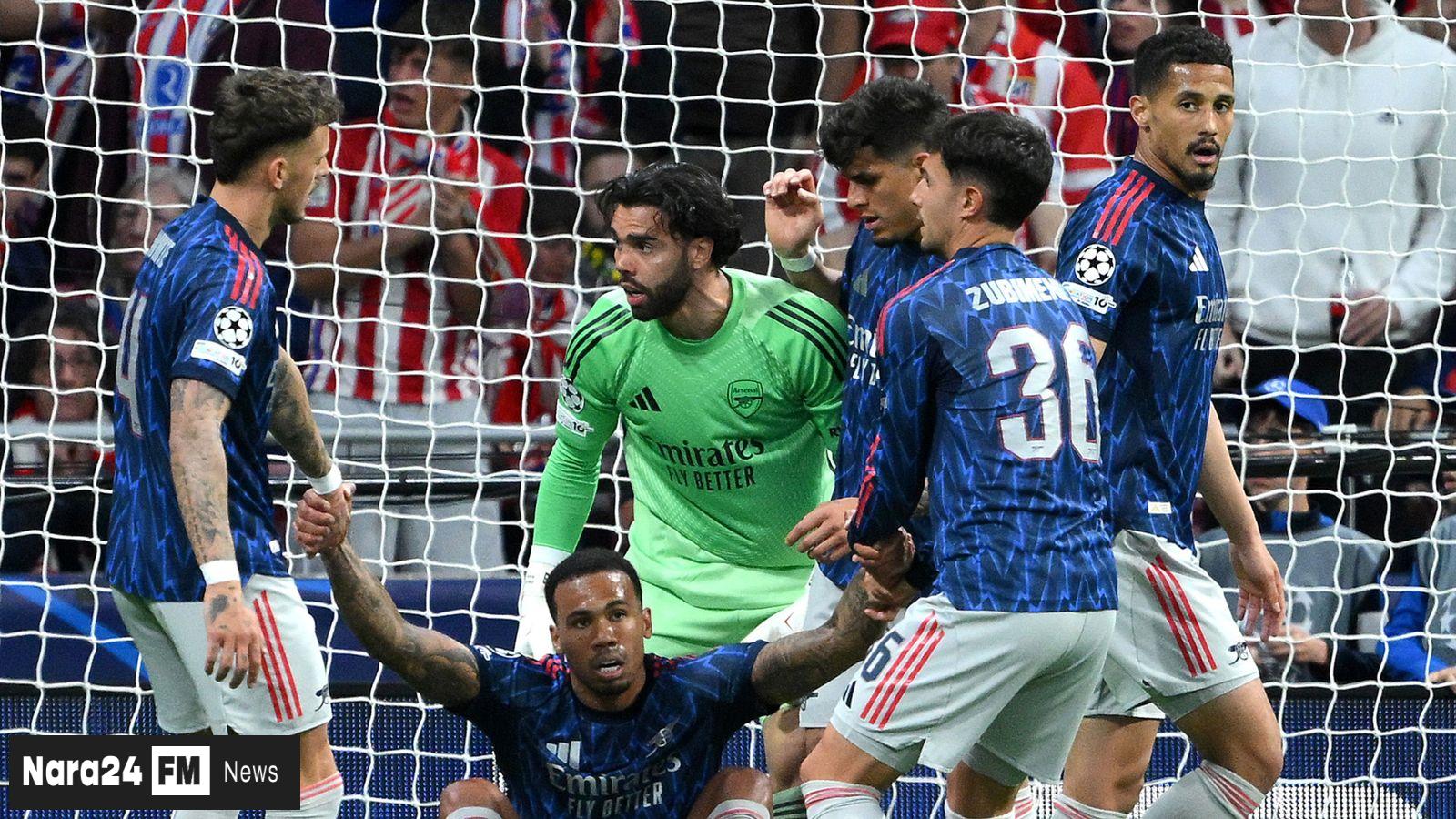
Arsenal’s resilience in a bruising encounter at the Metropolitano Stadium has reinforced the belief within the squad that defensive discipline can carry them through a season defined by overload. A hard-earned 1-1 draw with Atletico Madrid preserved their Champions League ambitions and set up a pivotal Premier League clash with Fulham, but it also laid bare the cumulative cost of a campaign unlike any other in Europe’s top leagues.
Diego Simeone sensed the strain long before the final whistle. The Atletico manager switched to a back five at half-time and later pointed to fatigue as a decisive factor. “You could see some of the fatigue they’ve been building up from so many matches, so much pressure, and the responsibility of having to win the Premier League and the Champions League,” he said. “All of that adds up. In the second half, we started to play better, especially in the final third.
Key developments
We created more chances. We just couldn’t get the goal to give us the edge.”
Arsenal, by contrast, have had no choice but to push through. Across Europe’s major leagues, no side has played more games this season than the Gunners, with a total of 57 fixtures and another massive test looming against Fulham on Saturday. David Raya, Martin Zubimendi and Declan Rice have each surpassed 4,000 minutes, symbols of a workload that has been unrelenting since last summer.
The pressure boiled over when a penalty awarded to Atletico Madrid was overturned after a VAR review. Mikel Arteta was incensed, insisting the decision robbed his players after months of striving to stay in title contention. “When you have fought so hard for nine and a half months to be in this position, that’s another goal that changes the tie completely,” he said. “It can’t happen. I’m sorry. We put so much on it. So, so, so much on it. This cannot happen.”
Reaction and response
Yet for all of Atletico’s second-half intensity, Arsenal’s defence held firm. Piero Hincapie dominated his battles, winning every duel he contested and accounting for nearly as many interceptions as the rest of the team. Behind him, William Saliba and Gabriel combined for more than twice as many clearances as all other players on the pitch, a statistic that captured their central role in keeping the Gunners’ Champions League hopes alive.
That resolve was not limited to the centre-backs. Noni Madueke tracked back to deny Ademola Lookman in the first half, while Gabriel Martinelli showed the same commitment on the opposite flank. Arteta praised the collective effort after the match, noting that mental strength has been as vital as physical endurance. “I’m very proud,” he said. “The way we handled the context for nine-and-a-half months is remarkable.
I really value what they’ve done because I’ve seen some of the best teams in the world here fall apart and concede three and four.”
What happens next
While other semi-finalists have showcased attacking firepower, Arsenal’s edge has come from defensive solidity. They have conceded just six goals in 13 Champions League matches this season, a record that reflects both organisation and necessity. With key attackers missing significant spells through injury, Arteta’s side have often been forced to prioritise containment, turning discipline into a weapon.
Depth will remain crucial as the fixture pile grows. Although Kai Havertz and Jurrien Timber were absent against Atletico Madrid, the impact of substitutes including Bukayo Saka, Eberechi Eze, Leandro Trossard, Gabriel Jesus and Cristhian Mosquera helped Arsenal steady the game late on. Their involvement offered a glimpse of the options Arteta can deploy to manage fatigue in the weeks ahead.
For now, the focus shifts to Fulham and another battle where control of tempo and energy levels could prove decisive. Arsenal’s warrior spirit has carried them this far, but the true test will be sustaining it through a schedule that shows little sign of letting up.






Comments (0)
Leave a Comment
Be the first to comment on this article!