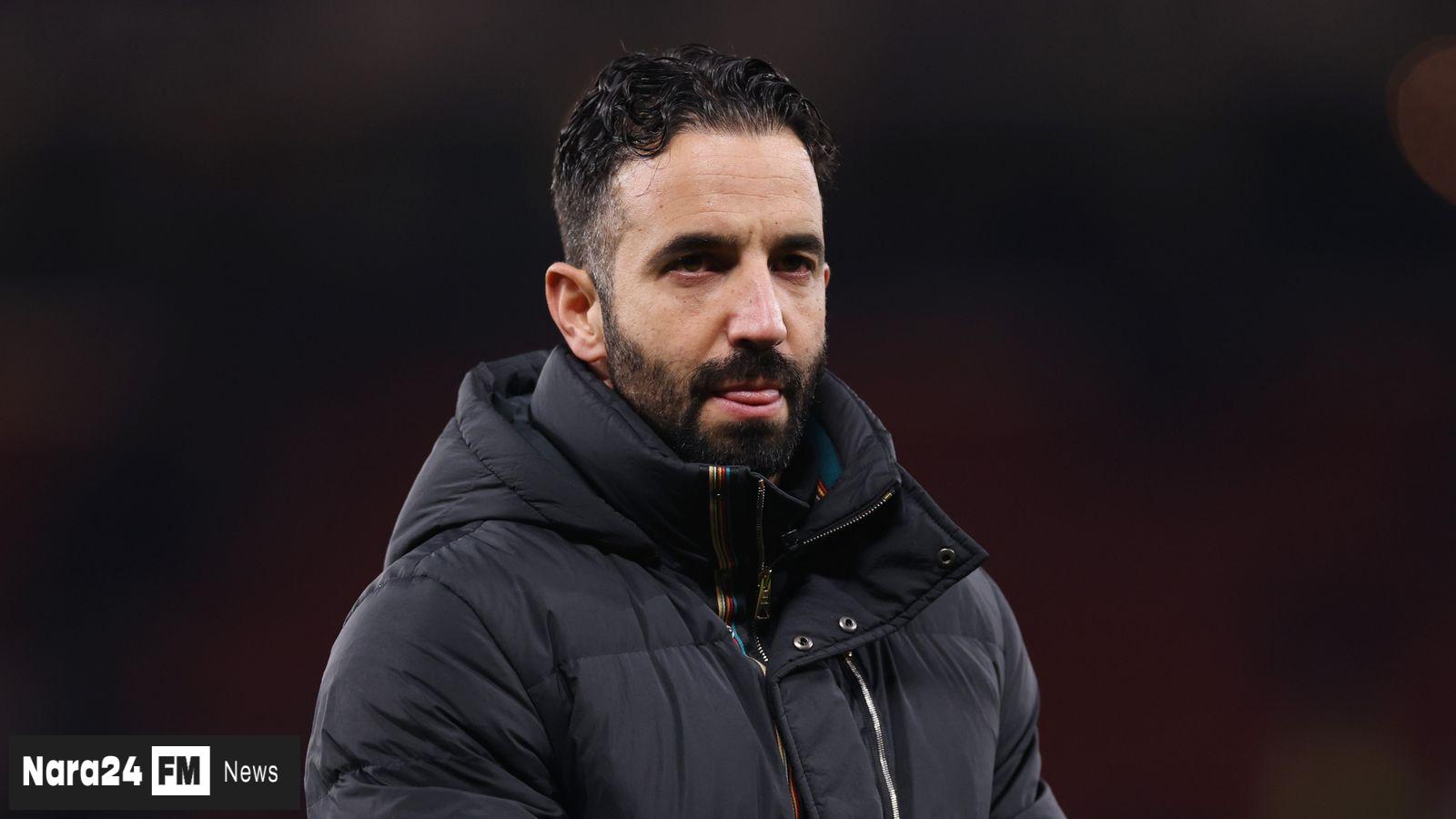
Manchester United head coach Ruben Amorim has voiced his concerns about the culture within the club, particularly among its young players, while defending his recent criticisms of academy graduates Harry Amass and Chido Obi.
Amorim, speaking ahead of United's match against Aston Villa, emphasized what he perceives as a prevailing sense of entitlement among the club's youth. He suggested that this mindset needs to be addressed to foster a more resilient and dedicated environment. "I think it's the feeling of entitlement that we have in our club," Amorim stated. "Sometimes strong words are not bad words. Sometimes difficult moments are not a bad thing for kids."
Last week, when questioned about his reluctance to feature another academy product, Kobbie Mainoo, Amorim cited Amass and Obi as examples of players who, in his view, had not yet reached the required standard for United. Both Amass and Obi responded to these comments by posting images on their Instagram accounts, which were later deleted. Amass shared a photo of himself receiving a player-of-the-month award at Sheffield Wednesday, while Obi posted an image of himself celebrating a goal for the U21 team.
Amorim's comments come amidst speculation about the future of Mainoo, who has seen limited game time this season. The 20-year-old midfielder, who started the Euro 2024 final for England, has been a subject of interest in the January transfer window. However, Amorim dismissed any notion that Mainoo's half-brother's public support for him would influence his selection decisions.
"We need to change as a club," Amorim asserted. "You guys talk about players who speak against clubs because they feel entitled, then you have legends say if you don't play, leave because everyone is wrong. No, let's stay and fight, let's overcome and maybe the manager is wrong. I have the feeling we need to fight against this feeling."
The Portuguese coach also addressed the broader issue of player development and the challenges faced by young talent. "I didn't say anything wrong, I spoke about how the luck of playing for Man Utd. Sometimes you play for Man Utd and see different realities and you understand football can be so different and you are really lucky to be at Man Utd. That was my point, but let's move on."
Amorim's remarks reflect his determination to instill a more competitive and accountable culture within the club, as Manchester United continues to navigate the complexities of managing and developing young talent.





Comments (0)
Leave a Comment
Be the first to comment on this article!