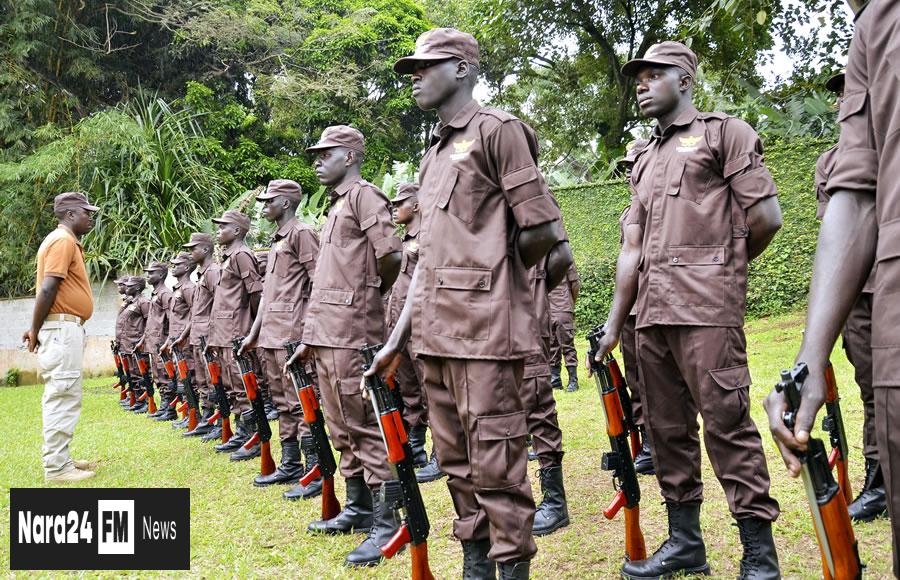
Uganda is implementing a sweeping transformation of its private security industry, with state authorities assuming direct control over the education and certification of all personnel in the field. As part of a broader regulatory crackdown, the Uganda Police Force has officially stepped in to train thousands of guards, signaling a decisive end to the loosely monitored era of the sector.
Speaking before the Parliamentary Committee on Defence and Internal Affairs, Gen. David Muhoozi, the Minister of State for Internal Affairs, outlined the strategic pivot. The government is transitioning from a permissive regulatory stance to a tightly controlled framework designed to neutralize what officials have characterized as unchecked, militia-like operations within the private security space.
Currently, an initial group of 7,085 security personnel is enrolled in taxpayer-funded courses at various police academies nationwide. The program, which will run through April 2026, is being offered at no cost to ensure consistent, high-quality instruction. Under the updated guidelines, all aspiring guards must complete their instruction either within official police training institutions or under the direct supervision of UPF instructors stationed at approved private company facilities.
The policy shift addresses mounting concerns regarding scale and oversight. With an estimated 82,000 private guards currently active in the country, the sector significantly outnumbers the official police force. This disparity has sparked debates about accountability, operational coordination, and potential vulnerabilities to national security. Additionally, authorities have grown increasingly alarmed by reports of unauthorized replicas of police attire, which have caused public confusion and compromised safety protocols. Moving forward, the UPF will maintain exclusive authority over uniform approvals and enforce a rigorous licensing system for both gear and firearms to prevent the emergence of rogue armed groups.
Gen. Muhoozi defended the initiative by pointing to the constitutional role of law enforcement in overseeing any armed civilian groups. He noted that while 457 private security firms are officially registered, the previous regulatory model has proven insufficient. The new approach replaces passive monitoring with active professionalization, backed by a newly designed curriculum that emphasizes emergency response, surveillance techniques, and de-escalation strategies.
Legislators have largely praised the direction of the reforms but cautioned that sustainable change requires solid legislative backing. Several committee members urged the swift passage of a dedicated private security law to institutionalize the standards and provide long-term operational clarity for industry stakeholders.
As the training program progresses, officials anticipate that the standardized education will elevate industry professionalism, align private operations with legal expectations, and ultimately restore public trust in civilian security services.






Comments (0)
Leave a Comment
Be the first to comment on this article!