In This Article
- President Museveni Accuses NUP of Systematic Electoral Fraud in 2021 Polls
- Historical Context of Electoral Misconduct in Uganda
- Planned Reforms to Combat Electoral Fraud
- Security Agency Conduct and Peace Maintenance
- Development Initiatives and Economic Policies
- Critique of Opposition and Call for Unity
Key Takeaways
- President Museveni accuses the NUP of orchestrating large-scale electoral fraud in the 2021 polls, including printing fake ballots and importing votes from Dubai.
- Museveni traces Uganda's electoral misconduct back to 1962 and highlights reforms like biometric verification to combat future fraud.
- The president condemns excessive force by security forces during elections but vows to maintain peace and law enforcement.
- Museveni emphasizes economic development through industrialization and regional markets, criticizing opposition leaders for lacking this focus.
- He defends free education initiatives and links school dropouts to the reintroduction of fees, promoting skilling programs as an alternative.
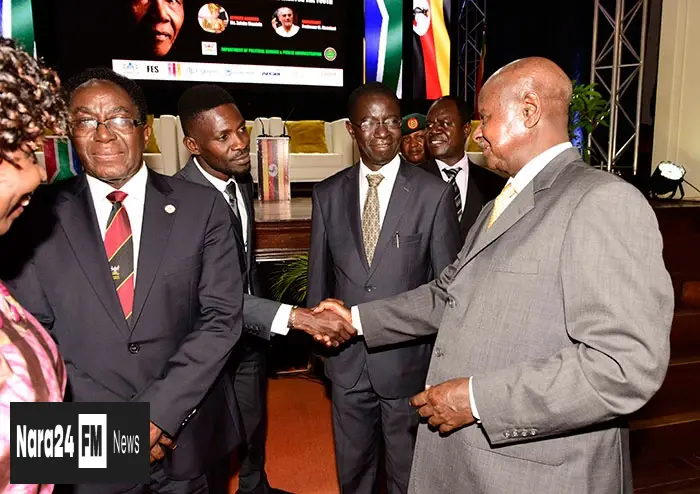
Ugandan President Yoweri Museveni has levied severe accusations against the National Unity Platform (NUP), claiming that the party engaged in extensive electoral malpractice during the 2021 polls. Museveni asserted that the alleged irregularities represent a worrying escalation in Uganda's history of electoral misconduct.
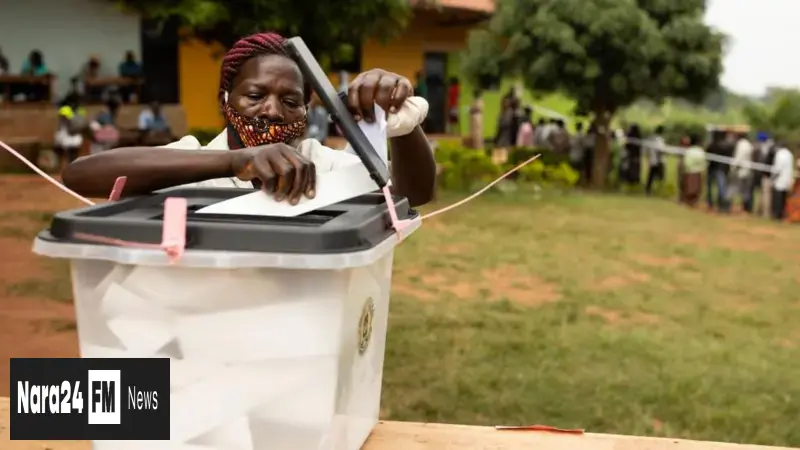
During a live radio broadcast from his Kisozi farm, Museveni detailed what he described as a highly organized and unprecedented level of fraud. "In Kampala, there was ballot stuffing, but this time they went further," he stated. "Fake ballot papers were printed on Nkrumah Road—approximately one million—and around 1.7 million votes were allegedly transported from Dubai. In total, that amounts to about 2.7 million fraudulent votes."
Museveni contextualized the current allegations within Uganda's historical struggles with electoral integrity, tracing the issue back to the country's early post-independence era. "Vote rigging has been a problem since 1962," he recalled, noting that political parties once used separate ballot boxes, which facilitated multiple voting and ballot stuffing.
The president highlighted that election-related challenges have been a recurring theme in Uganda's political history. Following the disputed 1962 elections, Uganda did not hold another national election for 18 years, until 1980. Since the National Resistance Movement (NRM) took power, Museveni's government has implemented reforms aimed at enhancing transparency and accountability in the electoral process.
"We introduced open lining-up, a single ballot paper, and a single ballot box with candidates' pictures," Museveni explained. "These measures can work, but they depend on vigilance."
Bingo Lovers Braced for Impact as Reeves' Budget Tax Hikes Loom
Bingo enthusiasts and venue operators are on edge, awaiting...
Read moreLooking ahead, Museveni revealed plans to bolster the deployment of biometric voter verification machines to combat emerging forms of electoral fraud. "This time, there will not be vote rigging," he asserted. "Even if your fingerprints are worn out, your eyes are not. Biometrics will prevent ballot stuffing."
On the conduct of security agencies during elections, Museveni cautioned against the use of excessive force, describing violence against civilians as unnecessary. "Beating people shows a lack of patience," he said. "Torture during elections is not necessary, and I will engage the security forces on this."
However, Museveni emphasized that maintaining peace remains a non-negotiable priority. "No one will be allowed to disturb Uganda's peace," he warned. "Those who attempt to cause disorder will be dealt with according to the law."
The president also touched on various development initiatives, highlighting progress in the Greater Mubende sub-region while acknowledging gaps related to leadership and prioritization. He noted improvements in infrastructure, including electricity, roads, telecommunications, schools, and health centers, and attributed population growth in the region to government immunization programs.
Government's Proposed Betting Tax Hike Warned to Harm Industry and Jobs ###
The Sun urges Chancellor Rachel Reeves to rethink plans for...
Read moreMuseveni reiterated that the government cannot be the primary employer in a country nearing 50 million people. "Real jobs come from wealth—factories, commercial agriculture, services, and ICT," he said, noting that factories now employ approximately 1.3 million Ugandans.
The president defended free education, blaming school dropouts on the reintroduction of school fees. "When we introduced Universal Primary Education (UPE), charges came back, and that led to dropouts," he said, adding that affected youth are being absorbed into Presidential Skilling Hubs.
Museveni also cautioned against inward-looking economic thinking, criticizing opposition leaders for failing to emphasize regional markets. "None of the opposition presidential candidates talk about the regional market," he said. "That thinking is dangerous."
Concluding his remarks, Museveni stressed the importance of unity and integration: "Our elders taught us 'Uhuru na Umoja'—freedom and unity. Being a big fish in small ponds weakens us."


Comments (0)
Leave a Comment
Be the first to comment on this article!